
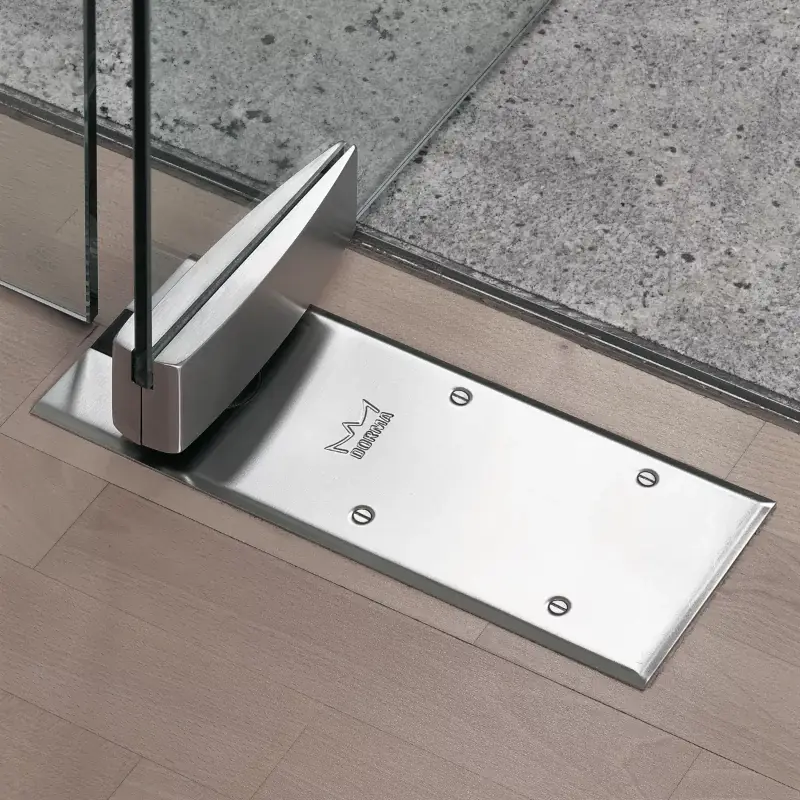
Concealed in floor below door
ANSI/BHMA A156.4 · EN 1154
Maryland, DC & Northern Virginia
A floor closer is a door closer set into a steel box, called a cement case, below the finished floor. The door sits on a spindle that rises from the closer, with a pivot at the top. When someone opens the door, the closer stores energy and swings it shut at a set speed. Floor closers suit glass storefronts, lobby entries and heavy pivot doors. They work for single-acting or double-acting doors and leave the door face and frame clean, with no arm in sight.
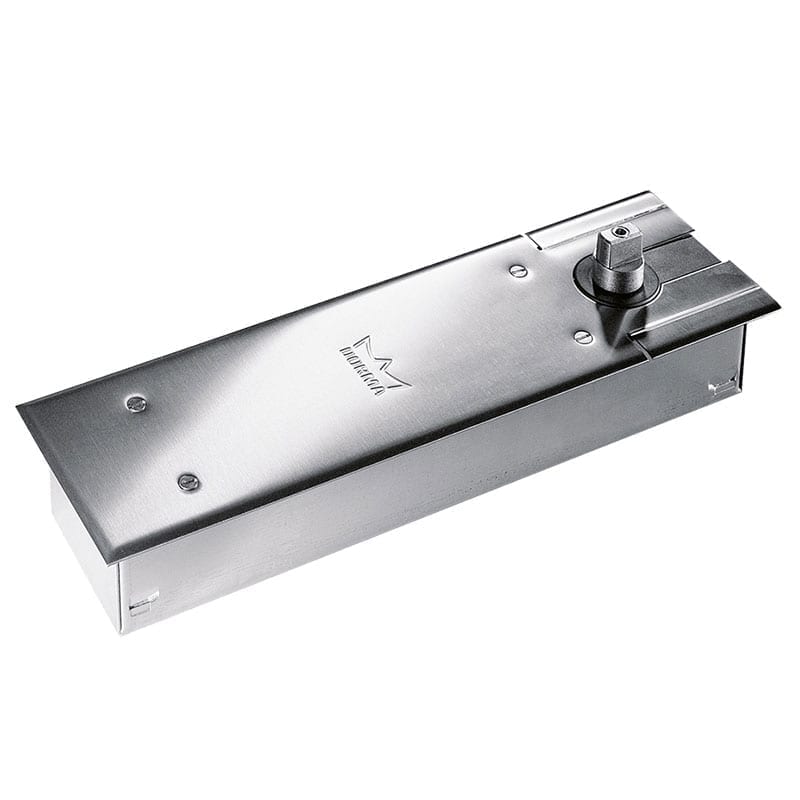
The closer hides below the floor, so glass doors and lobby entries keep a clean look.
Floor closers carry the door's weight on a pivot, which suits large, heavy and high-traffic doors.
With no exposed arm, there is nothing to pull, hang on or break in public spaces.
King Locksmith and Doors Inc. installs, repairs and services floor closers across Maryland, Washington DC and Northern Virginia. Our technicians work on storefronts, office lobbies, hospitals, hotels and government buildings. We service leading brands, including Rixson, dormakaba and Jackson, and we match each closer to your door weight, traffic and code needs. From one leaking closer to a full building upgrade, we show up on time, explain the work clearly and stand behind every job.
The right floor closer depends on your door, your traffic and your building codes. Use this guide to compare door weight, swing type, hold-open needs, fire and ADA rules, and long-term upkeep before you buy.
Floor closers come in different power sizes. A small interior wood door needs less force than a large glass entry or a bronze door. If the closer is too weak, the door will not latch. If it is too strong, people struggle to open it.
We weigh your door, check its width and look at wind and stack pressure. Then we pick a closer body with the right spring range and adjust it on site.
A single-acting floor closer lets the door swing one way, like a standard entry. A double-acting closer lets the door swing both ways and return to center. It works well in hospital corridors, restaurant kitchens and service halls.
You also need to choose center-hung or offset-hung mounting. Center-hung suits glass and double-acting doors. Offset-hung works like a standard hinge swing and fits single-acting doors in a stop frame. We confirm the right setup on site.
Many floor closers offer a hold-open point, often at 90 or 105 degrees. This helps with deliveries, moving carts and event traffic. Some models add delayed action, which gives slower users more time to pass through.
Backcheck slows the door near full open, so wind cannot slam it into a wall or nearby glass. Separate valves control closing speed and latch speed. With the right settings, the door closes firmly without snapping shut on people.
Fire-rated doors need a closer that is listed for that use. Standard hold-open is not allowed on most fire doors unless it releases automatically when the alarm sounds. The closer must latch the door every time.
The ADA limits opening force on most interior doors to 5 pounds, and it sets a minimum closing time. We check your local fire code, test the opening force and adjust each closer to help your doors pass inspection.
A floor closer lives in the floor, so water, salt and dirt are its biggest threats. In the DMV, winter salt and mopping water often seep into the cement case and cause rust or oil leaks.
Choose a closer with a sealed body and a stainless steel cover plate. Stick with brands that have parts available, such as Rixson, dormakaba or Jackson. We source common parts and can plan routine checks for your busiest doors.
Overhead closers are common, but they are not right for every door. Here is how a floor closer compares with a surface-mounted overhead closer on glass, pivot and high-traffic entries.
Consideration
Floor Closer
Overhead Closer
Hidden below floor, keeps glass fully clear
Visible arm and body clutter glass entries
Built for frameless tempered glass doors
Cannot mount directly on frameless tempered glass
Swings both ways and returns to center
Most models swing and close one way
No exposed arm to grab or break
Exposed arm invites tampering and hanging damage
Pivot carries weight, easing strain on frame
Hinges and frame carry the full load
Floor closers work hard and sit where water and dirt collect. Watch for these warning signs. Catching them early can save the closer, the cement case and the glass door.
We cut the floor, set and level the cement case, and hang the door to swing smoothly.
We swap failed closers for new units that fit your existing cement case whenever the size allows.
We tune closing speed, latch speed and backcheck to stop slamming, drifting and doors that won't latch.
We replace worn top pivots, spindles, straps and patch fittings that keep glass doors hanging straight and true.
We fit listed closers on fire doors and set opening force and timing to meet ADA rules.
A door that won't close or lock is a security risk. Call us for fast emergency help.
Tell us about your door. We’ll assess it on site and give you a clear, written quote with no surprises.