
Soffit or frame face
ANSI/BHMA A156.3 · UL 10C
Maryland, DC & Northern Virginia
A door coordinator is a mechanical device installed on pairs of double doors that controls the order in which each leaf closes. It holds the active door open until the inactive leaf fully seats into the frame, then releases the active leaf to latch over it.
Without this sequencing, double doors can collide, fail to seal, or leave your opening out of code compliance. Coordinators are essential on fire-rated assemblies, doors with overlapping astragals, and openings equipped with automatic flush bolts or vertical rod exit devices. NFPA 80 requires that the inactive leaf close before the active leaf whenever a coordinator is installed.
Guarantees the inactive leaf closes first, preventing door collision and ensuring the active leaf latches every time.
Meets NFPA 80 and UL listing requirements, keeping your fire-rated door assemblies inspection-ready year-round.
Eliminates destructive jamming between leaves, extending the service life of closers, flush bolts, and astragals.
King Locksmith and Doors Inc. serves commercial, government, healthcare, hospitality, and institutional clients across Maryland, Washington DC, and Northern Virginia. We specialize in door coordinator installation, troubleshooting, and repair for fire-rated and high-traffic double door openings. Our technicians understand NFPA 80 sequencing requirements, ANSI/BHMA standards, and the hardware compatibility issues that cause coordinator failures. Whether you manage a hospital corridor, a government facility, or a multi-tenant office building, we deliver reliable door sequencing solutions that keep your openings safe, compliant, and fully operational.
Selecting the right door coordinator depends on your frame dimensions, door weights, mounting space, and the type of hardware already installed. Below are the key factors to evaluate before specifying a coordinator for your opening.
Bar coordinators mount to the underside (soffit) of the door frame, presenting a slim, low-profile aluminum channel that spans the opening width. Internal components stay protected from dust, carts, and tampering. These are the industry standard for high-traffic commercial openings and are preferred in healthcare, education, and new construction where appearance and durability matter.
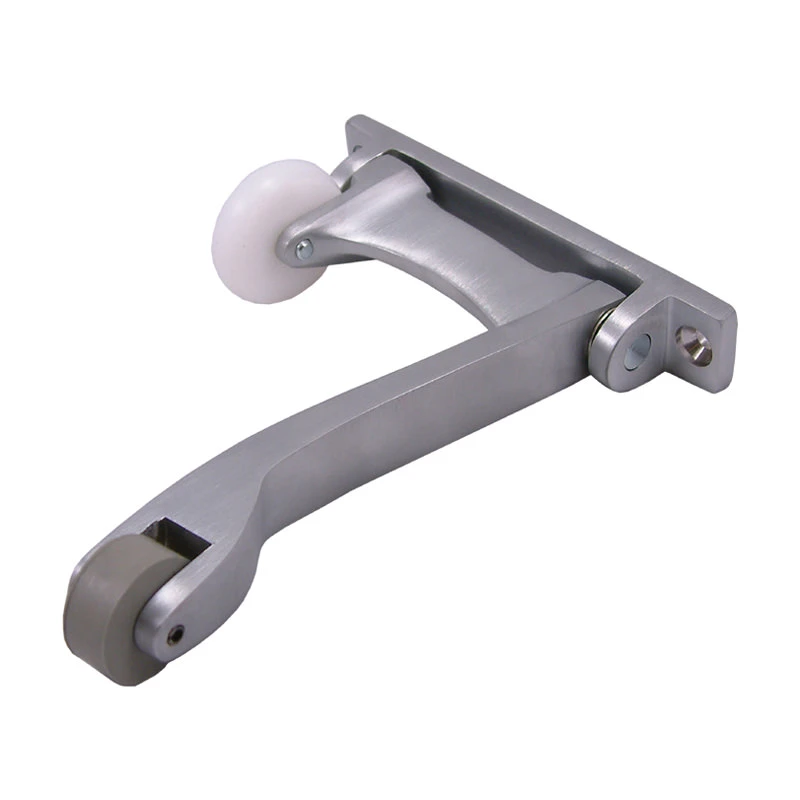
Gravity coordinators mount to the face of the frame above the doors on the pull side, using a weighted pivot arm to control sequencing. They are visible, surface-mounted units that are easy to install and forgiving in alignment. Gravity coordinators suit back-of-house, industrial, utility, and retrofit applications where function outweighs aesthetics. Both types carry UL listings for fire-rated assemblies.
Coordinator length depends on the active door width, inactive door width, and total frame opening between stops. For openings with unequal leaves, the coordinator length should equal the active door width plus approximately half the inactive door width. The coordinator must be at least 6 inches longer than the active door width and shorter than the overall frame opening.
Filler bars bridge the gap between the coordinator and the frame stop, creating a finished, continuous appearance. Stop height also matters: standard coordinators assume 5/8-inch stops on both sides. If your frame stops are narrower or wider, notify the manufacturer before ordering to avoid fitment issues.
Fire-rated double doors require a coordinator whenever both leaves use closers and one leaf must close before the other. NFPA 80 mandates that the inactive leaf must fully secure its automatic or self-latching flush bolts before the active leaf closes. Inspectors verify this through physical pull tests, not visual checks.
The coordinator must be part of a tested and listed assembly — mixing brands or substituting visually similar components from different manufacturers voids the fire rating. When specifying for fire-rated openings, confirm that the coordinator, closers, flush bolts, and astragal clearance all match the original test listing. Overpowering the active leaf to force faster closure can override the coordinator and cause inspection failures.
Door coordinators are mandatory on openings with overlapping astragals, where the active leaf cannot close until the inactive leaf is seated. They also work alongside automatic flush bolts and vertical rod exit devices to synchronize the closing sequence. A carry bar may be required when the inactive leaf can be opened first, ensuring the active leaf is held open to engage the coordinator mechanism.
Mounting brackets allow soffit-mounted hardware — such as parallel arm closers or vertical rod strikes — to be installed without interfering with the coordinator channel. Coordinators are non-handed, fitting either side of the door, and many models include field-adjustable override mechanisms that permit the active door to close under extreme pressure in high-traffic environments.
Healthcare facilities, government buildings, schools, and hospitality venues each present distinct door sequencing demands. Hospital corridors often have both leaves kept open, requiring coordinators that release the active leaf promptly when the inactive leaf closes. Schools and office complexes prioritize low-profile bar coordinators for aesthetics and durability in heavy traffic.
Industrial and service entrances favor rugged gravity coordinators that tolerate rough handling and retrofit easily onto existing frames. Government facilities often require Buy American Act compliance and strict label traceability to NFPA 80 test reports. King Locksmith and Doors Inc. stocks and installs coordinators from leading manufacturers, sized to your exact opening dimensions.
Door coordinators and door closers perform separate functions on double doors. Understanding the distinction prevents costly specification errors and ensures your assembly meets fire code requirements.
Consideration
Door Coordinators
Door Closers
Controls closing sequence of paired leaves
Controls speed and force of a single leaf
Double doors only
Single or double doors
Enforces inactive-first sequencing per NFPA 80
Provides automatic closing force for each leaf
Sequence timing and override force
Closing speed, backcheck, latch action
Fire-rated corridors, astragal openings, flush bolt pairs
Every swinging door requiring automatic closure
Door coordinators are mechanical devices subject to wear, misalignment, and field adjustments that degrade performance over time. Here are the most frequent failure patterns we encounter across the DMV region.
Precise sizing, soffit or gravity mounting, and full integration with closers and flush bolts.
On-site diagnosis of timing failures, override adjustments, and closer speed calibration.
Restoring coordinators to NFPA 80 standards with label-traceable components.
Sourcing the correct filler bars, mounting brackets, and carry bars for your opening.
Upgrading legacy coordinators to modern bar or gravity units on existing frames.
Scheduled inspections and adjustments to keep sequencing reliable year-round.
Tell us about your double door opening. We’ll assess the sequencing, verify code compliance, and recommend the right fix.