
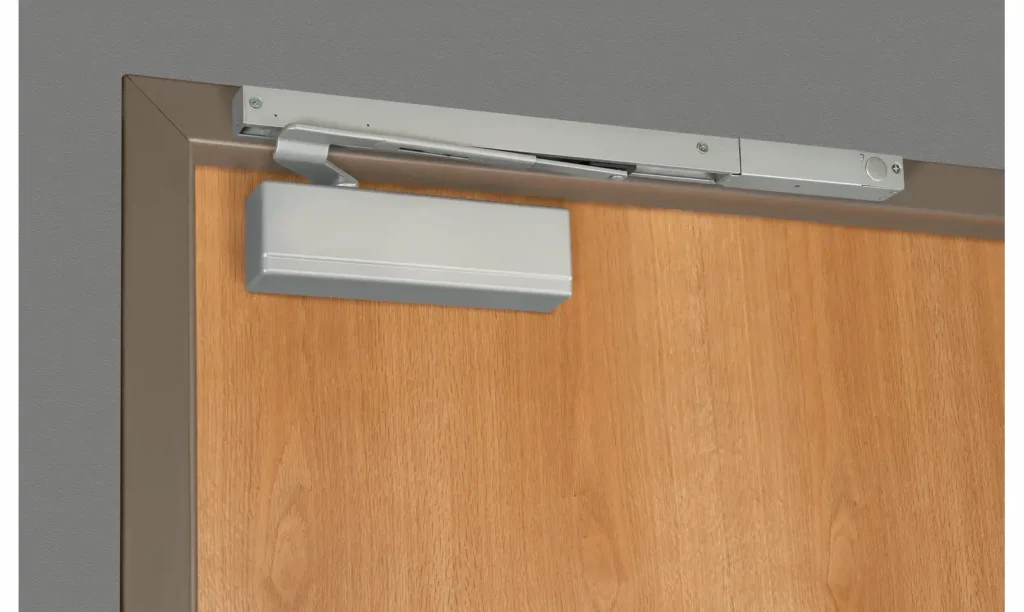
Hidden in frame or door
ANSI/BHMA A156.4 · EN 1154 · UL 10C · ADA
Maryland, DC & Northern Virginia
A concealed door closer controls how a door closes, just like a standard closer. The difference is where it sits. The closer body hides inside the frame header, the top rail of the door, or the floor. Only a slim track or arm shows when the door opens. When the door shuts, you see nothing at all. This keeps entrances clean and harder to tamper with. It suits lobbies, patient rooms, hotel suites, and secure offices where looks, safety, and control all matter every day.
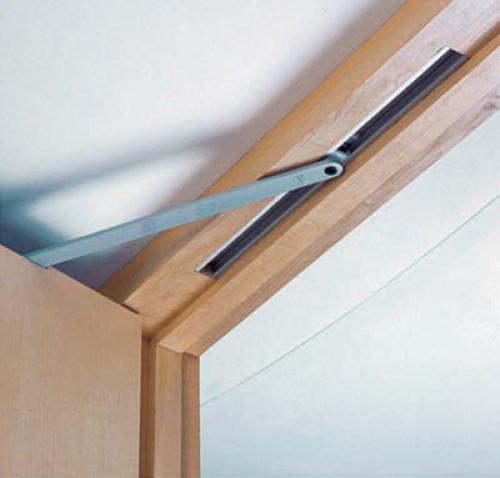
No bulky arm or box on the door. Your entrance keeps the look your architect designed.
Hidden parts are hard to reach or hang from. That means less abuse and fewer repairs.
Set to meet ADA opening force and closing speed, plus UL fire door rules when required.
King Locksmith and Doors Inc. is a commercial door and hardware company serving Maryland, Washington DC, and Northern Virginia. Our trained technicians install, adjust, and repair concealed door closers on hollow metal, aluminum storefront, and wood doors. We work with property managers, facility teams, general contractors, and government buyers. We show up on time, protect your finishes, and leave doors working right. From one sticking door to a full building retrofit, we handle it all.
The right concealed closer depends on your door, frame, traffic, and code needs. Picking wrong can mean costly frame work later. Use these five points to narrow your choice before you order any new hardware.
Concealed closers come in three main styles. Frame-mounted closers sit inside the header above the door. Door-mounted closers fit inside the top rail. Floor closers sit in a case set into the floor and often carry the door’s weight.
Frame-mounted units are the most common on hollow metal and storefront doors. Floor closers suit heavy glass doors, tall doors, and center-pivot doors. We check your opening first and then match the closer style to it.
Every closer has a power rating, often sized 1 through 6. A wider and heavier door needs more closing force. Exterior doors also fight wind and building air pressure, so they often need extra power.
Too little power and the door will not latch. Too much and it becomes hard to open, which can break ADA rules. We weigh and measure your door, then pick a closer with the right size and an adjustable spring.
Frame-mounted concealed closers need room inside the header. Many models need a header at least 4 1/2 inches deep. Shallow frames may need a new header, a header extension, or a different closer type.
Fire-rated frames add another step. Any cutting or prep work must follow the frame’s UL listing, or the door may fail inspection. We check header depth, frame gauge, and labels before we quote, so there are no surprises on install day.
A staff break room door and a busy hospital corridor door face very different daily use. High-traffic doors need heavy-duty closers with strong bodies, sealed fluid, and backcheck to stop doors from banging into walls.
Hold-open settings help doors that need to stay open during business hours. On fire doors, any hold-open must release when the fire alarm sounds. We match the closer’s grade to how many times your door opens and closes each day.
ADA limits opening force on most interior doors to 5 pounds. It also requires the door to take at least 5 seconds to close from 90 degrees to 12 degrees. That protects children, older adults, and people who move slowly.
Fire doors must close and latch on their own every time. Your closer must carry the right UL listing for the opening. We set, test, and document each closer so it passes your next inspection.
Surface-mounted closers are common and cost less up front. But concealed closers offer real advantages in looks, security, and durability. Here is how the two compare where it really counts.
Consideration
Concealed Door Closers
Surface-Mounted Door Closers
Fully hidden when the door is closed
Bulky arm and body always in view
No exposed arm to pull or hang on
Exposed arm can be bent or broken
Fewer grab points for behavioral health spaces
Arm creates a ligature and grab point
Body protected inside the frame or floor
Body exposed to sun, rain, and cold
Smooth surfaces are easy to wipe clean
Arms and brackets trap dust and grime
Concealed closers last a long time, but they do wear out. Because the parts are hidden, problems can go unnoticed. Watch for these common warning signs on your commercial doors.
We install frame, door, and floor concealed closers on new and existing openings, fully set to spec.
We fix leaking, slamming, and noisy concealed closers, and replace worn arms, tracks, and rollers on site.
When a closer fails, we swap in a matching unit so you avoid frame or floor work.
We convert existing doors from surface-mounted to concealed closers for a cleaner look, including all header prep.
We adjust opening force, closing speed, and latch speed so your doors meet ADA and fire rules.
Scheduled checks catch leaks and wear early, cut downtime, and keep every door ready for fire inspection.
Tell us about your doors, and we will visit your site, check your frames, and recommend the right concealed closer.