
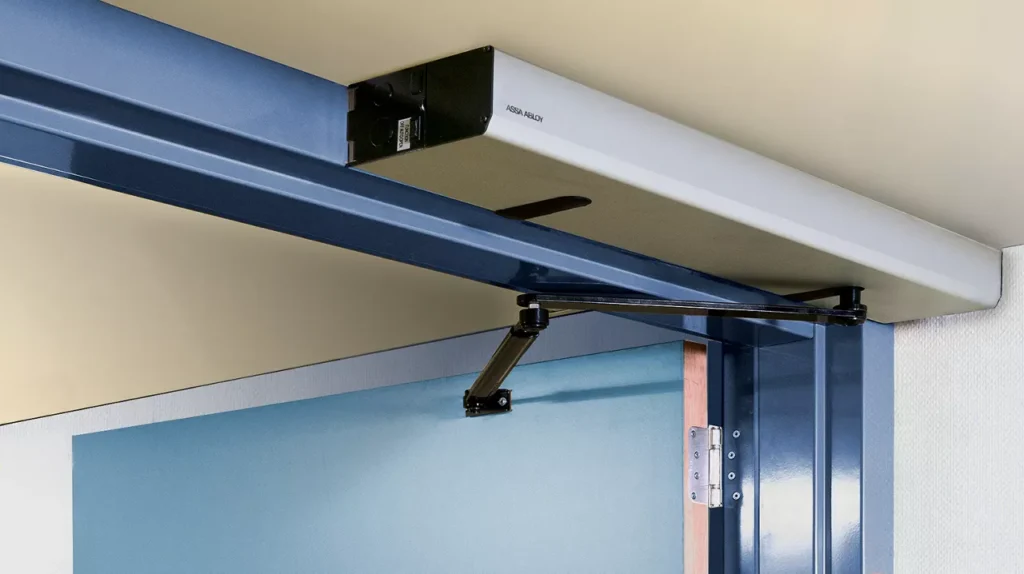
Surface, concealed, or header mounted
ANSI/BHMA A156.10 · A156.19 · ADA
Maryland, DC & Northern Virginia
An automatic door operator is a motor unit that opens and closes a swing or sliding door. It mounts above the door or hides in the frame. A push plate, wave sensor, or motion sensor tells it when to move. Some models open the door fully and quickly. Others, called low-energy operators, move slowly and gently. Both help people who use wheelchairs, walkers, or carts. They also cut down on touch points in busy spaces. We install, repair, and maintain these systems across the Washington Metropolitan Area.
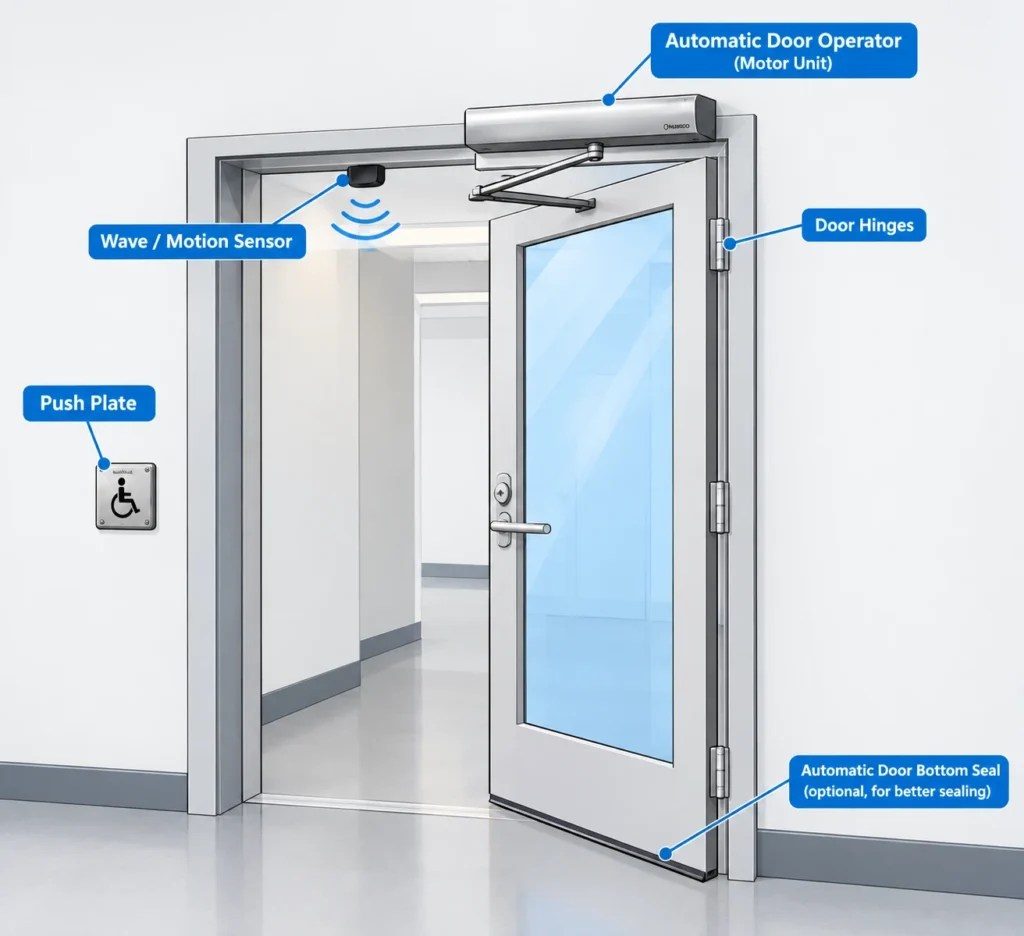
Give every visitor hands-free entry and help your site meet ADA rules and local access codes.
Fewer hands touch the door, so germs spread less in clinics, restrooms, lobbies, and dining areas.
Doors open on time for crowds, carts, and deliveries, which keeps lines moving and entrances clear.
King Locksmith and Doors Inc. is a commercial door and lock company based in the DMV. Our trained techs install, service, and repair automatic door operators for offices, schools, hospitals, hotels, and government sites. We work with leading brands and follow ANSI/BHMA and ADA guidelines on every job. We show up on time, explain your options in plain words, and give clear pricing. From one ADA push-button door to a full campus, we handle it.
Not every door needs the same operator. The right choice depends on who uses the door, how often, and where it sits. Use these five key factors to narrow your options before you buy one.
Start by counting how many people use the door each day. A quiet side office door has different needs than a busy hospital entrance.
Low-energy operators suit doors with light to moderate use, like restrooms and offices. They move slowly and need fewer sensors. Full-power operators handle heavy traffic at fast speeds. They need safety sensors and guide rails under ANSI/BHMA A156.10. Pick the type that fits your real daily use, not your best guess.
The operator must fit the door you have or plan to install. Swing operators work on standard hinged or pivot doors. They are the most common choice for retrofits.
Sliding operators suit wide entrances, like grocery stores and hospital lobbies. They save floor space and handle heavy foot traffic. Folding operators work in tight openings where a slider has no room to open. We check your frame, header, and door before we suggest a model.
How people trigger the door matters as much as the operator. The wrong switch can confuse users or leave the door standing open too long.
Push plates and wave switches work well for ADA doors and restrooms. Motion sensors open the door as people walk up to it. Keypads and card readers tie the operator into your access control system. Many sites use a mix, such as a sensor outside and a push plate inside.
Automatic doors must follow strict rules. ANSI/BHMA A156.10 covers full-power doors. A156.19 covers low-energy and power-assist swing doors. The ADA sets rules for reach, clear width, and opening force.
Fire-rated doors add more steps and paperwork. The operator must let the door close and latch on its own during a fire alarm. Local fire marshals in Maryland, DC, and Virginia may also inspect. We handle these details so your door passes inspection the first time.
An operator is only as good as the support behind it. Parts and service can get hard to find for rare, imported, or off-brand units.
We work with major brands such as LCN, Norton, Stanley, Horton, and dormakaba. These brands have strong parts supply and trained techs in the DMV. Ask about response times, warranty terms, and yearly safety checks before you buy. A good service plan keeps your door safe, compliant, and running every day.
Many buildings still rely on manual closers at their main entrances. Here is how an automatic operator compares on the points that matter most for access, safety, and daily use.
Consideration
Automatic Door Operator
Manual Door Closer
Hands-free entry for wheelchairs and walkers
Opening force can block many users
No handle contact with touchless sensors
Every user touches the same handle
Opens on time for steady crowds
Slows lines as people push doors
Closes fast to hold indoor temperature
Often propped open, wasting heating and cooling
Frees staff hands for carts and loads
Staff must stop to push doors
Automatic doors work hard every day, so small issues can grow fast. Watch for these common warning signs. Catching them early keeps your entrance safe, compliant, and open for business.
We install swing, sliding, and folding operators sized to your door, traffic, and local building code needs.
We add low-energy operators and push plates to existing doors, so you gain access without replacing frames.
Our techs fix motors, gearboxes, arms, controllers, and sensors to get stuck or slamming doors working again.
We check sensors, speeds, forces, and signage against ANSI/BHMA standards and give you a clear written report.
We link operators to card readers, keypads, and electric strikes so doors unlock and open in sync.
Scheduled visits keep parts adjusted and lubed, cutting surprise breakdowns and extending the life of your operators.
Tell us about your doors. We’ll visit your site, recommend the right operator, and send you a clear, no-pressure quote.