
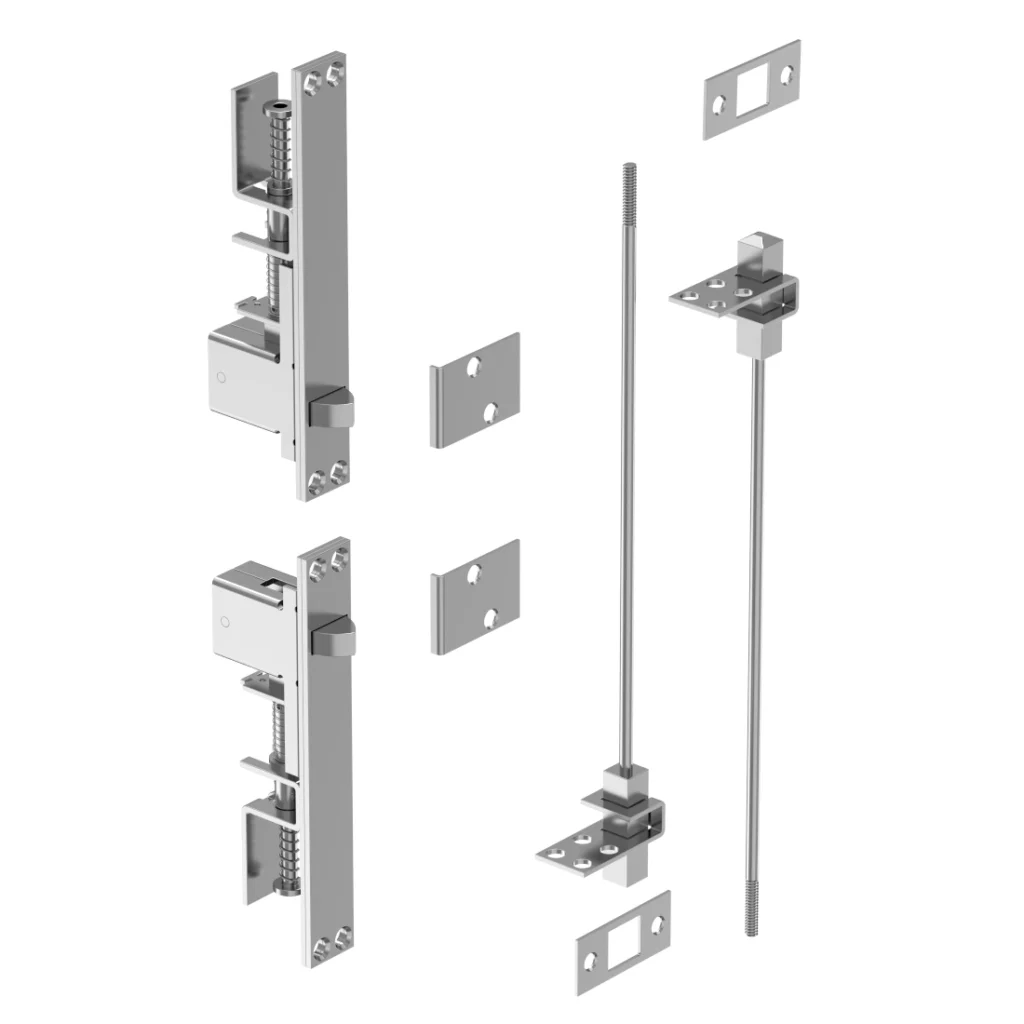
Mortised into inactive leaf edge
ANSI/BHMA A156.16 · NFPA 80 · UL 10C
Maryland, DC & Northern Virginia
An automatic flush bolt is a latch set into the edge of the inactive leaf on a pair of doors. When the active leaf closes, it presses a trigger. The top and bottom bolts then shoot into the frame header and the floor strike. When the active leaf opens, the bolts pull back on their own. No one has to reach up or bend down. That makes the pair safer, easier to use, and ready for fire-rated openings where manual bolts are usually not allowed.
Meets the positive-latching needs of fire-rated pairs, helping your doors pass their NFPA 80 annual inspections.
The inactive leaf locks itself every time, so no one ever forgets to set a bolt.
No reaching for a top bolt or stooping down, which supports ADA-friendly use of both doors.
King Locksmith and Doors Inc. is a commercial door Security and hardware company serving Maryland, Washington DC, and Northern Virginia. Our technicians install, adjust, and repair automatic flush bolts on hollow metal and wood door pairs. We work with property managers, schools, hospitals, hotels, and government sites. Every job starts with a site check of the door, frame, and floor strike, so the new bolts fit right, latch every time, and meet your local fire code.
Not every automatic flush bolt fits every pair of doors. Door material, fire rating, floor conditions, and traffic shape the right choice. Use these five checks before you order or replace hardware on your opening.
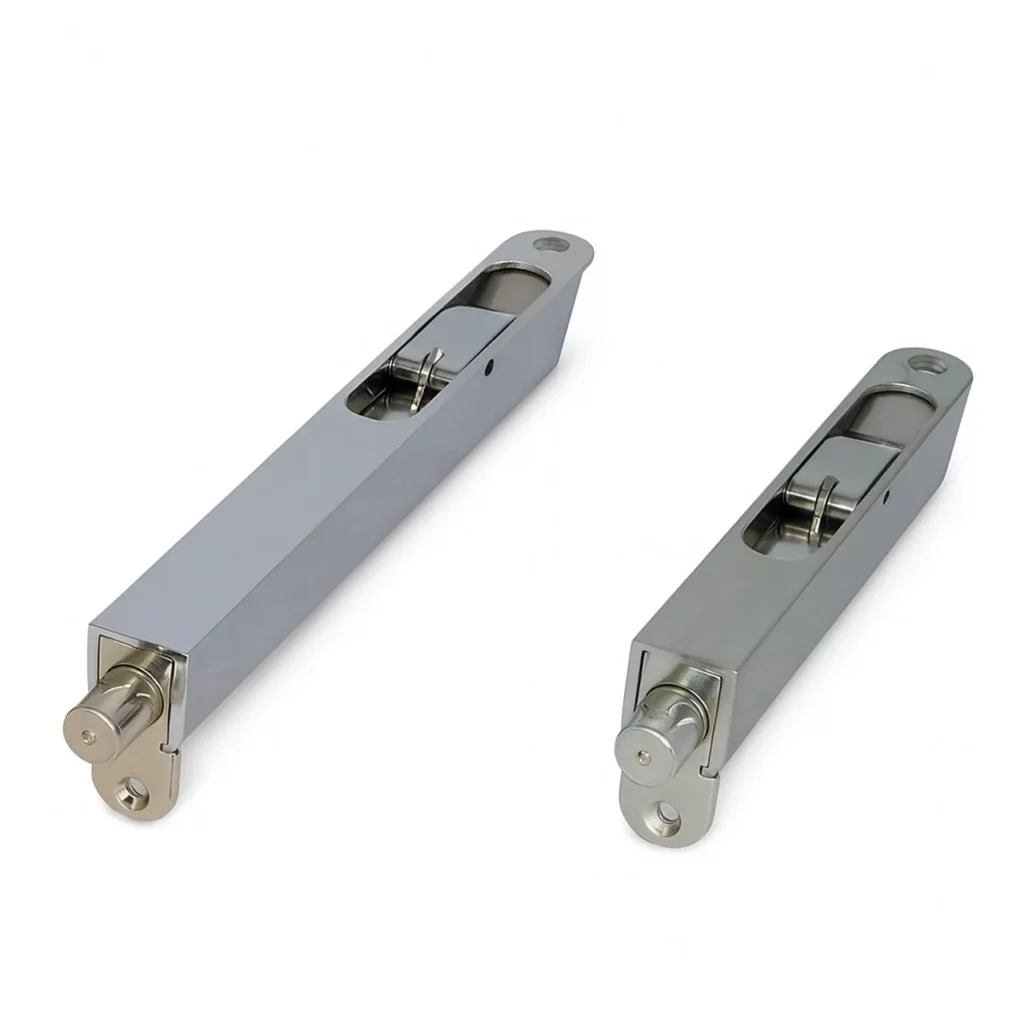
Automatic flush bolts come in two main body styles. Metal door models mortise into the edge of hollow metal doors. Wood door models use a longer body and different fasteners to hold firm in solid-core wood.
Using a metal door bolt in a wood door, or the reverse, leads to loose screws and poor latching. Always confirm the door construction, edge profile, and thickness before you order. Metal doors also need the right factory prep.
Fire-rated door pairs must latch on their own every time they close. For this reason, fire codes generally do not allow manual flush bolts on rated pairs. Automatic or constant-latching bolts are the usual choice.
Look for a UL-listed bolt that matches the door’s rating, such as 90 minutes or three hours. The bolt must also suit the door, the frame, and other hardware. We check each part so your pair passes its annual inspection.
The bottom bolt drops into a strike set in the floor or threshold. A dustproof strike is the smart pick in most buildings. Its spring plunger keeps dirt, gravel, and debris out of the bolt hole.
Up top, the frame head needs a clean strike prep that lines up with the bolt. Uneven floors, sagging doors, and worn hinges can throw off both points, so we measure the whole door opening before any new install.
Many pairs have an astragal, a strip that covers the gap where the two doors meet. With an astragal, the inactive leaf must close first. If the active leaf closes first, the doors jam and the bolts never engage.
A coordinator fixes this problem. It holds the active leaf open until the inactive leaf is fully shut. Both leaves also need working door closers, and fire-rated pairs often need all three parts to pass inspection.
Busy doors in schools, hospitals, and hotels open hundreds of times a day. Choose heavy-duty automatic flush bolts tested to ANSI/BHMA A156.16 for these spots. Stronger springs and steel parts last longer under hard use.
Finish matters too. Satin chrome is common, but stainless steel or antimicrobial coatings suit healthcare spaces. Match the finish to your other hardware for a clean, matched look, and ask us about bolt models that fit your existing door prep.
Manual flush bolts cost less up front, but they depend on people to work them. Here is how automatic models compare on the points that matter most for commercial doors.
Consideration
Automatic Flush Bolts
Manual Flush Bolts
Approved for most fire-rated door pairs
Generally not allowed on rated pairs
Locks inactive leaf automatically on every close
Staff must remember to throw bolts
No reaching overhead or bending to floor
Top bolt often sits out of reach
Allowed on more egress pairs by code
Heavily restricted on required egress doors
Consistent latching reduces forced-entry weak points
Unset bolts leave inactive leaf loose
Automatic flush bolts work hard and hide inside the door edge, so small problems go unnoticed. Watch for these signs that your bolts need an adjustment, repair, or replacement soon.
We mortise, fit, and adjust automatic flush bolts on hollow metal and wood pairs for smooth latching.
We free stuck bolts, replace broken springs and triggers, and realign bolts that keep missing their strikes.
We swap outdated manual flush bolts for automatic models to meet fire code and simplify daily use.
We add or repair coordinators and astragals so your paired doors always close in the right order.
We install, clean, and replace dustproof floor strikes so bottom bolts drop in cleanly every single time.
We correct flush bolt deficiencies found during NFPA 80 inspections and help your rated pairs pass retest.
Get automatic flush bolts that latch every time. Request a free site assessment in Maryland, DC, or Northern Virginia today.